Saturday, May 31, 2008

Poem!


Etcetera (for Ellis)

You reflect me
And the woman I love,
It makes me smile.

We urge you
To stay
Breathe
Sleep
Feed
Etc

Your feet are too small
For footprints.

Our heads are too full
Of you to not feel
Your little weight.

Etcetera is a better word
Than others I might use.

We are yours if you want us.

When you don’t need us
Let us down gently
Without the need
For lies and etc.


Kevin Cadwallender

Gigs for your Diary


Tuesday June 3rd ROYAL OAK 'Foakies' Edinburgh Martin Stephenson and Kevin Cadwallender

Thursday June 5th Meadow Bar Buccleuch Street 7.30pm VOX BOX TEAM SLAM


Wed 18th June at Kath Kenny's Firesprung book launch BRIDGE HOTEL Newcastle

Sat June 22nd Afternoon at the Angel of the North Ten celebration POETRY FILM : Angelus Septentrio by Kevin Cadwallender.
then at Bridge Hotel for Red Squirrel Drey Poetry night with Kevin Cadwallender, Kath Kenny, Steve urwin, James Oates, Alistair Robinson, Nancy Somerville plus the launch of Mike Dillon's book Child from Water.

June 27th-30th Jockstock Festival

July 4th London Launch of Kath Kenny's new book 'Firesprung' with reading by Kevin Cadwallender

July 3rd Wicker Man Festival

Everfall

Tuesday, March 04, 2008

Give Poetry back to the people!


New Statesman article by Neil Astley of Bloodaxe Books.It reminds us who we are, argues Neil Astley - but only if we shake off academic elitism and celebrate voices from our communities and around the world

Poetry in Britain is both thriving and struggling: it is flourishing at grass-roots level while poetry publishing is floundering. Bookshops have drastically reduced their ranges of poetry. Publishers have scrapped or shortened their poetry lists and are taking on very few new authors. Small presses have folded. Yet, paradoxically, public interest in poetry has never been higher.

More people write poetry than go to football matches, and poetry is popular in schools, at festivals and at the hundreds of readings staged every week in pubs, theatres, arts centres and even people's homes. Poetry has reached a wider audience through films, radio, television and the internet, as well as through initiatives such as London's Poems on the Underground, which has been imitated around the world. More people than ever believe, as Jackie Kay wrote in her National Poetry Day blog, that "poetry makes us think about who we are".

And this is not just a British phenomenon. Big names in world poetry read to full houses at Scotland's poetry festival, StAnza in St Andrews, every March, and at Ledbury in July. This month, hundreds of poetry enthusiasts will flock to the biennial Poetry International at the South Bank Centre in London (24-29 October), where the international line-up includes Elizabeth Alexander, Martin Espada and Jane Hirshfield (US), Michael Longley and Paul Muldoon (Ireland), Tua Forsström (Finland), Tomas Tranströmer (Sweden), Arundhathi Subramaniam (India) and Gabeba Baderoon (South Africa). The following weekend (3-5 November), Aldeburgh Poetry Festival will fill the town's Jubilee Hall with readings by writers from Kurdistan and Catalonia to the US.

Despite this obvious diversity and vitality, all the talk in poetry publishing is of crisis. The bookshops are blamed for declining sales - but this is not the whole story. The major chains have vigorously promoted poetry books aimed at a broader readership, with books such as my anthology Staying Alive selected for displays and offers. Yet broader-based initiatives are not working either. While in the US National Poetry Month helps sell thousands of poetry books, our annual National Poetry Day is far less successful in bookselling terms.

Poetry is both flourishing and floundering in Britain because it has a split identity. If bookshops ignore their customers, they go out of business. When poetry publishers and reviewers ignore their readership, this is called "maintaining critical standards". And they still expect the public to defer to their judgement and accept their offerings, because they know best. The producers of poetry aren't in tune with the lovers of poetry. Many poets and publishers are actually hostile to the promotion of poetry - as the poet Michael Hofmann put it in the Times: "promotion violates the innocence and defencelessness of poetry". They see marketing as a dirty word instead of simply the means by which their books are made available to more readers.

This reluctance to engage with readers comes at a heavy price. As bookshops stock less and less poetry, concentrating on safe bets such as anthologies and selected poems by big-name authors, publishers reduce their output of new titles. Cover prices rise as print runs fall, which further affects sales. Major bookshops derive 94 per cent of their income from 25 per cent of their stock. In accountancy terms, three-quarters of their stock is a waste of capital, taking up valuable shelf space - and that includes all the poetry.

Given the large potential market, poetry publishers could stake a claim to some of that space - but only if they are publishing a range of books and authors that people actually want to read. Continuing to package their books to appeal only to an intellectual elite has severely disadvantaged them. If readers find a book visually unappealing, they won't pick it up. And if the back-cover blurb is a piece of turgid literary criticism, new readers will be scared off.

Readers don't have access to the diverse range of work being produced, not just in Britain, but from around the world, because much of the poetry establishment is narrowly based, male- dominated, white Anglocentric and skewed by factions and vested interests. Too often, poetry editors think of themselves and their poet friends as the arbiters of taste, selecting only writers they think people ought to read. They are unresponsive to much poetry by women (who comprise more than two-thirds of poetry's readership) as well as to writing from Britain's rapidly growing ethnic minorities. Ignoring the readership would be commercial suicide in any other field, but this malpractice in poetry publishing and reviewing has survived into the 21st century thanks to "academic protectionism". This is something that has also tainted poetry reviewing: the few reviews that do appear are mostly of books by the same small group of mostly male, white British poets who also judge the main poetry prizes and are often either poetry editors or academics in university departments of English or creative writing.

Editors' "personal taste" is too often an excuse or disguise for elitism and arrogance. In my view, my responsibility as an editor is to be responsive to writers and readers, and to give readers access to a wide range of world poetry. Publishers and writers who address a broader readership (as Bloodaxe has done with Staying Alive and other anthologies) are attacked by elitist critics for "dumbing down" - but receive overwhelming support from readers as well as from intelligent poets. Contemporary poetry has never been more varied, but what the public gets to hear about are the new post-Larkin "mainstream" and the "postmodern avant-gardists" (with their academic strongholds in Oxford and Cambridge respectively). More broad-based poetry expressing spiritual wisdom, emotional truth or social and political engagement is of little interest to either camp. Exciting new work by major American, European and Caribbean writers, from Martin Carter, Galway Kinnell and Yusef Komunyakaa to Jane Hirshfield, Mary Oliver and Adam Zagajewski, has been almost totally ignored by national-press poetry reviewers.

But where print editors or their reviewers lag behind, radio producers, who have to be responsive to their audience, are much more in touch with the full range of what's current. Black and Asian poets with large grass-roots followings are frequently heard on national radio programmes. Radio has realised that modern English-language poetry is in fact a set of multiple interconnected traditions, including the oral-based and literary traditions of African-American, black British, Caribbean and south Asian poetry. The same changes in our idea of the novel have transformed fiction publishing - the recent success of Monica Ali, Zadie Smith and Kiran Desai would have been unthinkable a generation ago - and it is time for those changes to extend to poetry.

The establishment must be responsive not to literary and academic cliques, but to readers, especially at a time when public interest in poetry is growing so rapidly. Poetry's dinosaurs have to realise that our country, culture and economic climate have changed, and so have their res ponsibilities. Their wake-up call needs to come before poetry publishing self-destructs. Internet sites are not enough. We need books.

Neil Astley is editor of Bloodaxe Books, which he founded in 1978. His books include the bestselling poetry anthologies "Staying Alive" and "Being Alive"


Poetry International is at the South Bank Centre, London SE1, from 24 to 29 October.
For tickets and further details log on to http://www.rfh.org.uk/poetryinternational

The Aldeburgh Poetry Festival is at the Jubilee Hall, Aldeburgh, Suffolk, from 3 to 5 November.
For tickets and further details log on to http://www.aldeburghpoetryfestival.org


Read more articles from our poetry special issue at http://www.newstatesman.com/200610230055

Tell us your favourite poems at http://www.newstatesman.com/yourpoems

Sunday, March 02, 2008

MINE : Poem


Mine

No it’s not for me
They closed down the colliery village
I was raised in two or three elections ago
And I moved on, never looked back.
It’s not for my children
Their plans will always be
On bank.
It’s not even for my Dad
Who exchanged pits for ships
Who got out, never living to see
His friends redundant.
It’s not for my forebears of migrant miners
Following the coal dust trails
From Cymru to closure.
Most of us knew it was over
Long before 1984
And southern outrage
Was too little too late.
The rows of For Sale signs
Are rows of gravestones.

Happy hour in the Trust
On Black Tuesday
£1 a pint
Why thirty thousand pints
I’d be able to buy with my redundancy


Thirty thousand pints.
Not enough to flood a seam with.

Kevin Cadwallender

Tuesday, October 24, 2006

10 by 10 @ the Bridge Hotel, Newcastle.

Zebra Publishing
Presents
Ten by Ten
Bridge Hotel
Nr High Level Bridge
Newcastle upon Tyne
Thursday 9th November
8.00pm onwards
Admission Free
Come along to the Bridge Hotel in Newcastle to see ten top performers
with spoken words,
words set to music, words shared between people, words on walls, words
in songs, words in
poetry, words in stories… each of the ten performers has ten minutes to
engage you, thrill you,
entrance you and hopefully inspire you.
The November Ten by Ten night will be hosted by New Word Order MC Karl
Thompson
We have a fantastic line up for the Ten by Ten; we have top poets, new
poets, singer
songwriters, poets putting words to music, published poets, unsigned
poets. It's going to be
FABULOUS.
The performers will be:
Claire Morgan: Domain Jane and Mother will be giving us a taste of her
unique poetry.
Kate Fox was our MC in October and now you can have a chance to hear
this award winning
poet do her own slot.
Shutlar & Spence who sound like a Music Hall act but are in fact a duo
of fine poets
Ira Lightman was on Radio 4 recently, and if you heard him you'll not
want to miss this chance
to see him live.
Kevin Cadwallender is a legend in the North East and one of its most
influential poets.
Ye Min will be reading many short poems around an embarrassing theme.
Katherine Farrimond. Aspiring academic, novice poet, popular culture
geek, and inept waitress
Is this another of Kate's relatives?
The Harlots: Just when you thought it couldn't get any better, we have
music from the Harlots
For more info contact jeff@zebrapublishing.co.uk

Sunday, October 22, 2006

SAND BOX


November 16th at the Bridge Hotel, Newcastle 7.30pm

Some Sand poets reading some poems with

Kevin Cadwallender, Nev Clay, Tom Kelly & Alistair Robinson

with music from Matt & Shani of Joe Byrne.

ADMISSION ONE MEASLY QUID

Performance Poetry

What is Performance Poetry?
Performance poetry as its name suggests is anything that is written especially with an audience in mind and to be ‘performed’ live
It is this word ‘performance’ that is the key here.

What is the difference between performance poetry and poetry that is spoken?

Generally poetry that is meant for the page and written with the idea of an audience that divides into many individual ‘silent’ readers and was not meant to be read out loud is read often as it appears on the page, i.e. it may follow poetic rules of rhythm, it may be delivered in what is called , ;’the poetic voice’ which enables listeners to capture every word but may not reflect natural speech patterns.

In general performance poetry tends to be more naturalistic, reflecting speech patterns and with some emphasis on entertainment.

Performance poetry then can be the way you read something rather than what you are reading.

That is not to say that Poetic devices such as Rhyme, Repetition, Assonance, Repetition, Meter , Rhythm and Repetition (arf , arf !), and all of the other arsenal of poetic weapons are not present in Performance Poetry. They are but they will be used for their sound value (how the audience hears it) rather than their value visually (how a reader reads it).

One of the more popular forms of Performance Poetry pieces that most poets have in their repertoire is called a ‘list’ poem. These usually employ repetition and may be humourous or not.

This leads us to the question Should Performance Poetry be funny?

Well, it doesn’t have to be. It might be angry, It might be polemic, It might be sad.
In fact it can do all of the things that poetry can do. It is more about attitude and delivery than a particular type of poem although humour is popular.

Why is humour popular?
I would say that humour is popular because it engages an audience on an emotional level. Which is exactly what good poetry should do!


What is the difference between Stand Up Comedy and Performance Poetry.
Comedy in this context has a certain amount of crossover and many performance poets because of the comedy that they use , go down well in comedy clubs. The difference I think is in the end product. A comedian wants us to laugh. We may also think about issues that are raised but he wants us to laugh. A poet on the other hand wants us to think, primarily even whilst making us laugh.
Sometimes it is hard to tell the difference between a thoughtful comedian and a less thoughtful performance poet. The human emotions they play with are common ground. Sometimes the edges overlap.

What poems are best suited to performance?
Well you have to remember that the difference between a poet and a performance poet
Is that the performance poet is seeking to elicit an immediate response from the audience whereas a poet who is writing for the page can only elicit a delayed response. That is an audience may not have the time for prolonged reflection.

How do you find something funny to write about?

A tough question, but if you find it funny then the chances are that someone else will find it funny also.
And
Trial and error. Nothing is written in stone. Try your poems out at home read them aloud to friends, family. Note how they react naturally not what they say afterwards.
(They are after all your friends and family!)

Audiences are strange beasts and will laugh where you want them to and where they want to.

Ok let’s assume we have a poem to perform.
Before you go anywhere near a stage you must acquaint yourself with the tools of the stage. (You wouldn’t go and try to fix your car without the right tools so don’t do it with the stage).

What have we got?

A microphone, A microphone stand, A wire that leads to the P.A. from the microphone. Maybe a lectern, maybe not. Everything beyond this is not your concern. (unless it becomes your concern)


If you are going to be using a microphone at readings get your own and a little practice amp and get some practice in. Learn how to use the microphone. How it reacts to your own voice, how you can use it for effect.

There are basically two ways to use a microphone.

If the room is full and noisy you will need to speak in a stage voice into the microphone with the microphone within a few inches of your mouth.

If the room is quiet you can let the microphone pick up your voice and stand a more relaxed distance from the mike, but still you are not talking in a normal speaking voice volume wise.

Presuming we know how to use a microphone. Here are some pointers.

1) Understand how you come across to other people. It doesn’t matter if you are shy. You can control how you are perceived. If you look nervous and shy and ‘amateur’ the audience will dismiss you as such.
2) Choose your poems before you arrive at the reading. Having said that, be prepared for any eventuality. If someone starts a theme in the evening and you have a great poem on that theme, do it and the audience will remember the theme and associate it with you.
3) Between poems, try to become familiar with the audience, learn where the laughter spots are, watch for anyone who might heckle, (you can do this as you watch the crowd interact with other performers and as they arrive, learn the ‘feel’ of the room.) learn where the quiet spots are. Between poems instead of saying ‘and the next poem is’ think of a unrelated incident, an anecdote or an explanation of why you wrote the poem. Remember these don’t have to be true, they can be written beforehand but tell them as if you have just thought of them. It looks more spontaneous.

4) Eye contact. You don’t have to be looking at everyone . But if they think you are it helps the audience to feel a part of the proceedings. You all know what it feels like when you are talking to someone and they don’t look at you.

5) Looking like you own the stage area is important. If you look like you belong there . People will allow you to be there.

6) Never patronise your audience. They don’t want to be told every little obscure reference in your poem. If they want to know they might ask you later or buy a book!

7) The classic paper shuffle comes from insecurity. Three ways to over come it.

a) make it part of the act
b) Mark the poems in a reading copy of a book or only take the poems you want to read onstage.
c) Learn the poems by heart.

8) Don’t mumble or fidget. Speak Clearly and if you hand is shaking your papers
keep it away from the mike.


A PERFORMANCE POETRY SET

Ok you are reasonably happy with the poem and the microphone, you have overcome basic errors. What next.

At a poetry reading there are what’s called open mike or floorspots. Usually a new poet gets to do a couple of poems or maybe only one.(5 minutes) Choose a poem with the most impact if you are doing one. Choose two memorable poems if you get two.
If you are asked to do three poems and only have two good ones put the weaker poem in the middle. People will remember your opening and closing . A good opener can carry the goodwill of the audience through a weak next poem onto your stronger third poem. Try new poems in the middle and then make them stronger .

Say you are invited to do a 20 minute feature spot. Don’t be fooled into thinking that you can do about ten poems because you timed it at home. Look for six medium length poems and with introductions, interludes for anecdotes and audience interaction you will have you 20 minutes. If audiences are clapping between poems these will take up a couple of minutes per set of 20 minutes.

Use a watch to time most poetry readings and everyone over runs.
Leave them wanting more not wanting you to get off.
What I am also saying is don’t overstay your welcome, know when to get off.

About leaving the stage remember you are being observed as you leave the stage. Don’t break the spell by becoming a miserable sod straight away. Be approachable. Take the plaudits with grace and try not to let it go to your head.

After you have read don’t dash off immediately have the good manners to watch the other acts. You might learn something and you might get another reading.

hope this helps someone.

Kevin Cadwallender

Thursday, October 19, 2006

Jo Byrne gig


Friday 20th October 7.30pm at The Royalty Sunderland with support from Kickin' Jane. (Photo: Alan Sill)

BBC - Wear - Features - The perfect performance


BBC - Wear - Features - The perfect performance


Photo: Tony Griffiths

Poetry Review Review by Nigel McLoughlin

'North by North East covers forty-nine poets in 377 pages. If you want to know what's going on right now in the poetry scene in the North East, this is the book to buy. Like all good anthologies, it offers the reader a chance to discover poets they hadn't previously read. Among those who impressed me are Kevin Cadwallender and Valerie Laws. Cadwallender's poems speak from the inner city and the voice has a knowing humour which lifts the poems above their bleak surroundings. Laws's images are vivid and the language rattles and sparks. One gets the feelings she chooses her subjects carefuly, seeking the intense and the pregnant within them and offering the reader something of the 'real' experience they contain. Of course the anthology also offers generous selections of work by Harrison, Stevenson, Allnutt, Herbert, O'Brien et al ; as well as the excellent Brendan Cleary, S.J. Litherland and Katrina Porteous.'

Sunday, October 15, 2006

What's bin hid and what's bin did

I have been doing reviews for the Durham Literature Festival
view them at www.literaturefestival.co.uk on the site blog.

Thursday, October 05, 2006

Familiar


In response to questions from picture on http://honeyforthehead.blogspot.com
of me carrying my daughter 'Charlie'. I have three kids from my marriage. I was married 18 years. I am no longer married. Here are the beautiful children Matt 18, Shani 17 and Charlie 7. Obviously they don't get their looks from me.

Wednesday, October 04, 2006

Peter Finch's Handbook

How To Publish Yourself

advice from Peter Finch's classic handbook on self-publishing
"By far the best guide to self-publishing in print" Writers' Monthly
"thoroughly recommended" Freelance Writing And Photography

The best up-to-the-minute advice for any author on the brink of going it alone. Information on setting yourself up, professional presentation, printing, design, desktop publishing and marketing and promotion, as well as much more. Savour the success stories of Timothy Mo and Jill Paton Walsh, and weigh up the pros and cons of publishing in other media, from CDs to videos to the World Wide Web. This a complete handbook that takes the total beginner from a scruffy manuscript to a finished, marketed and saleable book. If you have the ability to put up a shelf then you can produce the books to go on it. And the costs involved are not necessarily enormous.
Chapters cover:
Why get involved? Should authors publish themselves?
Historical precedents. Famous self-publishers of the past and their stories.
Present day self-publishing practitioners
The publishing scene
How to establish yourself as a publisher
What do books consist of?
How to prepare copy
Printing processes and how they work
Book design, not as arcane as you might think
How to make production cheaper
How to improve on basic print
Can't cope? Advice on where to get advice. There are helpers out there.
Desktop publishing is no such thing. How to use what it actually does
Selling. The most important thin in a book's career
Marketing and promotion
Alternatives to traditional book publication.
Poetry - a special case
If it can go wrong it will. Disaster recovery.
Plus two great appendices:
Organisations of interest (and use) to self-publishers
Book lists - what guide books are available and how can they help. An essential list
What readers said on Amazon:
"This is an excellent and very encouraging book written in a light, accessible style with just the right amount of humour. Every page has a wealth of useful tips and information and, having read it, I feel far more confident about becoming a self-publisher."
"I read this book from start to finish in two days, completely soaking up the information. It provides a guide on all the basics to self-publishing with enough information to explore the concept further. Peter Finch hits exactly the right note of encouragement to do it yourself."
"It is an almost step-by-step introduction that covers all of the important stuff you need to know ...... I wouldn't be without it"

Revised edition is available now
published by Allison & Busby
ISBN 0749003014. Paperback. £8.99ordering information

Further Wikipedia information on Vanity Presses

Differences from commercial publishers
The term “vanity press” is generally derogatory, and is often used to imply that an author using such a service is only publishing out of vanity, and that his or her work could not be commercially successful. Some vanity presses are in fact scams, including those identified at the Science Fiction and Fantasy Writers of America (SFWA) website. In general, any publisher that expects the author to pay a large fee upfront (while promising or hinting at fame and fortune), is most likely dishonest, and certainly should be approached warily.
Some companies offer printing (and perhaps limited distribution) for a fee. If honest, such companies will explain their fees, what they do and do not offer, and how their service differs from that of a commercial publisher. Such services can be a viable way for an author to self-publish without owning printing equipment. This is particularly attractive to an author of a work with a limited, specialized appeal which may not interest mainstream publishers, or to the author who intends to promote his or her work personally. However, the true distinction between vanity publishing and self-publishing is simple: who owns the books when they come off the printing press? If the answer is the printer, who then pays royalties to the author on the basis of books sold, then the book has been vanity published. If the author owns the books outright, and can thus dispose of them as he or she likes, then that author has self-published.
Scholarly journals often ask authors to pay page charges but use peer review to keep a high scientific standard. Poets often self-publish, as their work is generally of extremely specialized appeal, and therefore risky to mainstream publishers.
A mainstream publisher traditionally assumes the risk of publication and production costs, selects the works to be published, edits the author's text, and provides for marketing and distribution, provides the ISBN and satisfies whatever legal deposit and copyright registration formalities are required. Such a publisher normally pays the author a fee, called an advance, for the right to publish the author's work; and further payments, called royalties, based on the sales of the work. This led to James D. Macdonald's famous dictum, "Money should always flow toward the author" (sometimes called Yog's Law).
A vanity publisher typically fails to provide any useful editing service, and is not selective, printing works by anyone willing to pay a fee. This lack of selectivity is the main reason for the low esteem in which most of the literary world holds vanity publishers. Many vanity publishers charge excessive fees, which are never likely to be recouped from sales of the books involved. Vanity publishers typically do little or no effective marketing. Formerly they did little or no distribution. Now vanity publishers may offer web-based sales, or make a book available via online booksellers, but they generally do no marketing. Furthermore, many bookstores -- especially large chain stores -- avoid self-published books.

Business model
Vanity publishers typically offer contracts that strongly favor the publisher, charging high fees while providing low-quality books. They often sell worthless add-on services related to editing and marketing, and are frequently charged with outright scams.
A self-publisher is an author who also undertakes the functions of a publisher for his or her own book. The classic "self-publisher" writes, edits, markets and promotes the book themselves, relying on a printer only for actual printing and binding. More recently, companies have offered their services to act as a sort of agent between the writer and a small printing operation. In these cases, the distiction between self-publishing and vanity publishing is less obvious than it once was.
Many PODs (print on demand companies) using modern digital copy machines are the most recent incarnations of vanity presses. Some have turned to scamming authors in order to keep their machines busy and to help pay for them. During the first years of the 21st century the mainstream printing business went into a slump and the gross oversupply of digital printing machines (like big Xerography machines with add-on units to bind books) forced traditional printers as well as the new print on demand companies to seek new sources of revenue.
Vanity presses earn their money, not from sales of books to readers like other publishers, but from sales of books to the authors. The author receives the shipment of books and may attempt to resell them through whatever channels are available. In some cases, the copies are not even bound.

Alternatives to vanity publishing
Writers considering self-publishing often also consider directly hiring a printer. According to self-publisher and poet Peter Finch, vanity presses charge higher premiums and create a risk that an author who has published with a vanity press will have more difficulty working with a respectable publisher in the future.
Some PODs (print on demand companies) using modern digital copy machines have chosen to act as printers and sellers of support services for authors interested in self-publishing. Such firms are typically marked by clear contract terms, lack of excessive fees, retail prices comparable to those from commercial printers, lack of pressure to purchase "extra" services, contracts which do not claim exclusive rights to the work being published (though one would be hard pressed to find a legitimate publisher willing to put out a competing edition, making non-exclusivity meaningless), and honest indications of what services they will and won't provide, and what results the author may reasonably expect. The distinction between these firms and vanity presses is essentially trivial, though a source of great confusion as the low fees have attracted tens of thousands of authors who wish to avoid the stigma of vanity publishing while doing just that.

Libraries
The typical library avoids stocking self-published books, since most vanity publications have not gone through selection, revision, copyediting and other critical steps which are normal for commercial for-profit publishers. Most libraries will not accept such vanity publications, even when they are offered free of charge, since even then there are costs involved: all library books have to be described in a catalogue, and require classification stickers and other elements. The total cost of cataloguing and general processing in 2002 was about $50 per book in the United States regardless of the size or original cost of the book. Then, the cost of keeping the book on the shelves has to be added, each year. In any case, it is usual for books to be chosen for a library by the application of a collection development policy designed to meet the needs of a particular user community, and vanity publications only rarely meet those needs.
On the rare occasions when libraries accept the product of a vanity press, they usually require the donor to sign a form giving to the library the right to do what it pleases with the item. The item is sometimes then disposed of in a yearly book sale or by some other process for the distribution of unwanted items.
Exceptions include local histories, which are of specialized interest enough to be uninteresting to commercial publishers but which are sought out by libraries.
Many libraries and reviewers do not clearly distinguish between vanity publications and self-publications, and are apt to decline or resist any book that does not come from a commercial press. Indeed in some cases any book produced using POD technology encounters such resistance, even if it is from a small commercial publisher.

Vanity presses in fiction
Umberto Eco's novel Foucault's Pendulum discusses the inside workings of a vanity press publishing company. Elaine Viets's novel Murder Between the Covers involves a self-published author attempting to set up a bookstore signing. The hero of Jonathan Coe's novel What a Carve-Up is commissioned over a long period to write a book by an otherwise vanity publisher. The company is satirized at some length.

Some vanity presses
American Biographical Institute (see Scams Page, CAV, below)
American Literary Press, Inc.
AuthorHouse (formerly 1st Books Library)
Booksurge (formerly GreatUnpublished.com)
Dorrance
iUniverse
Poetry.com, aka The International Library of Poetry
PublishAmerica
Lulu.com
Melrose Press (aff. International Biographical Centre, Cambridge)
SterlingHouse Publisher
Trafford Publishing
Vantage Press
Watermark Press
Xlibris - a notable Print-On-Demand provider of assisted self-publishing services

See

Vanity Presses

I have been asked a lot about Vanity presses here is what Wikipedia has to say about it.A vanity press or vanity publisher is a book printer which, while claiming to be a publisher, charges writers a fee in return for publishing their books. Jonathan Clifford claims to have coined the term in 1959 [1]. In its very simplest terms, while a commercial publisher's intended market is the general public, a vanity publisher's intended market is the author him/herself. Many authorities consider an author mill to be a kind of vanity publisher. A vanity press is distinguished from a small press publisher in that the small press acts as its larger cousins do, performing the traditional roles of editorial selection, binding and review, and marketing at its own expense, rather than at the expense of the author.
The so-called "vanity" companies often refer to themselves as joint-venture or subsidy publishers, because the author "subsidizes" (or finances) the publication. A vanity press will generally agree to print and bind any author's work if the author is willing to pay for the service; these fees typically form a vanity press's profits.
Commercial publishers, on the other hand, derive their profit from sales of the book, and must therefore be cautious and deliberate in choosing to publish works that will sell, particularly as they must recoup their investment in the book (such as an advance payment and royalties to the author, editorial guidance, promotion, marketing, or advertising). To better help sell their books, commercial publishers may also be selective in order to cultivate a reputation for high-quality work, or to specialize in a particular genre. Because vanity presses are not selective, publication by a vanity press is typically not seen as conferring the same recognition or prestige as commercial publication. Vanity presses do offer more independence for the author than does the mainstream publishing industry; however, their fees are often higher than the fees normally charged for similar printing services, and sometimes restrictive contracts are required.

I will find other interesting viewpoints so watch this space.

Saturday, September 16, 2006

Event at The Bridge Hotel

Zebra Publishing Presents
Ten by Ten
Bridge Hotel Nr High Level Bridge Newcastle upon Tyne Thursday 12th October 8.00pm onwards Admission Free For more info contact jeff@zebrapublishing.co.uk
Come along to the Bridge Hotel in Newcastle to see ten top performers with spoken words, words set to music, words shared between people, words on walls, words in songs, words in poetry, words in stories… each of the ten performers has ten minutes to engage you, thrill you, entrance you and hopefully inspire you. The first Ten By Ten night kicks off at the Bridge Hotel and will be hosted by Stand Up comedian and poetry diva Kate Fox. We have a fantastic line up for the first Ten by Ten; we have top poets, new poets, singer songwriters, poets putting words to music, published poets, unsigned poets. It's going to be FABULOUS. The performers will be David Franks, Ian Watson, Kyla Clay Fox, John Cartmel-Crossley, John Quinn, The Plexus (featuring Karl Thompson and Ralph Stokes), Scott Tyrrell, Sheree Mack, Simma and Valerie Apted.
Ian Watson Have failed to set the world alight in 57 years but as my mother says, 'Who would want an arsonist in their family?' Originally from Isle of Lewis now living in Darlington where gannets aren't part of the staple diet. Gemini on a lot of medication. Pleased to meet you...
John Quinn John Quinn began as a spoken word performer back in the 80's at the height of the ranting poet era. His humorous and quirky style is both familiar and strange, blending poetry and prose with image and text.John Cartmel-Crossley John has been a cultural layabout for many years. He has contributed to over thirty small press Poetry magazines. In 2004 he gained an M.A. in creative writing (poetry) at the University of Northumbria, and is a winner of the Biscuit International Poetry Prize. He is the editor of OPENDOOR creative arts magazine.The Plexus: Karl Thompson - Words and gibberish Karl is one sixth of Newcastle's infamous Poetry Vandals, co-director of New Word Order and award winning performance poet. He's twice taken the team prize at The City of Culture 2008 poetry slam. He's performed extensively through out the UK and in Europe 'The Plexus' is his newest venture with Ralph Stokes - Music, guitars/effects and noise Ralph is an up and coming music producer, musician and party head. His musical styles range from ambient dub through to psytrance, waving hello at rock on the way. Ralph has appeared at Newcastle Green festival and other local events and gigs.Valerie Apted Valerie is Secretary of the Northumberland Writers and is currently studying for her MA in Creative Writing at Newcastle. She enjoys performing her poems, has had poems published in several magazines and on TV. Sheree Mack Sheree was born in Bradford, to a Trinidadian father and mother of Ghanaian descent. She is the creator and coordinator of Identity on Tyne, the only group in the North East providing a space exclusively for writers of colour. She is currently completing her PhD at University of Newcastle upon-Tyne, focusing on black British women poets and her own collection, 'Family Album'. Kyla Clay-Fox Kyla is the larger half of a set of twins. She has been writing poetry since she was published, aged eight, in a church magazine, despite being an atheist since conception. (Well, you try and have faith when you're in the womb for 9 months with your brother standing on your head!) Simma A songwriter/singer from Newcastle. He started gigging 12 years ago and is founder of Newcastle's Acoustic Circus. He has performed countless times in and around The North of England and Scotland. He is currently writing, gigging, selling Album Trouble Sleeping, and being funny on BBC Radio Newcastle on Saturday mornings. David Franks David will read and sing unaccompanied a selection of poems from his collection "Walkabouts: travels and conclusions in verse", which is in some libraries (along with a related C.D. "Chants from Walkabouts") and is free on the web at - walkaboutsverse.741.com Scott Tyrrell Scott is a member of the Poetry Vandals and a multiple national award-winning poet and comedian. His targets range from popular culture, useless technology, political and personal absurdity to the residues of childhood insecurity. All delivered with a healthy irreverence and world-weary exasperation of someone who's spent way too much time in queues.

Wednesday, September 06, 2006

Ten by Ten


Zebra Publishing presents
Ten by Ten
We are looking for ten people to perform in ten, ten minutes slots at
the Bridge Hotel in
Newcastle on the nights of Thursday 12th October, Thursday 9th November
and Thursday
14th December.
We want new material, new ideas, you can be a poet, rapper, writer,
singer/songwriter. All we
ask is that the material you perform is your own and your performance
is a maximum of ten
minutes long.
On the night there will be no door charge, no fee and no expenses, it's
just for the hell of it.
We held a trial night at the Cumberland earlier in the year and we were
amazed but not
surprised at the talent that came along and disappointed that we
couldn't give everyone who
applied a spot. You have three dates to choose from, so let us know
which dates you are
interested in and we will try and give everyone their ten minutes of
fame (If you can call
performing at the Bridge Hotel fame).
Email us now…
Jeff & Annie Zebra Publishing jeff@poetryvandals.co.uk

Sunday, September 03, 2006

What I am Reading (as if you care!)

George Bernard Shaw
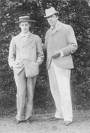
Oscar and Bosie (right)

(my daughter Shani at Oscar's Grave in Pere Lachaise, Paris) (S.J.Litherland right)


Currently engrossed in Lord Alfred Douglas' correspondence with George Bernard Shaw. Fascinating stuff, Ego meets Tantrum, the Childe Alfred and St. Christopher. Snapshot of Victorian manners and literary dogfighting. Oscar must be spinning under all those lipstick kisses and concrete.
Draft of 'Mugs' by Paul Bodie. Haven't read it all but will comment further at a later date. Enjoying it so far!
The Silver Crown by Robert O' Brien, classic children's book he also wrote Mrs. Frisbee and the Rats of Nimh I think. Enjoyable adventure romp.
Lord Cucumber by Joe Orton and Kenneth Halliwell, Wodehouse style mucky farce.
Work of the Wind by S.J.Litherland (reading Mac Sweeney's Book of Demons too) A matched pair. Fabulous tour de force from Jackie, Review to follow for BEE.
Lots of books on Diabetes as I have just been diagnosed as having it. That should put paid to my drinking! Ah well it says nothing here about the sugar content of cocaine.
More later.

Two Poems for Mr.Bodie

Both poems from up and coming collection,
'The Lost Art of Catching Trains'

URBANAL

We have already bought the t shirts
they say
‘God Wears burberry’
They will appeal to all demographics,
youth culture , womens institutes,
they will sell like hot cakes.
we will sell hot cakes too,
(they will sell like t-shirts.)

On the allotment someone
has pulled the head off a pigeon
it blinks once as its body attempts flight.
I don’t like this world much.
I throw up on Gary’s new combats,
he scrapes it off with a Bowie knife.
Named after the famous Byker Wall
frontiersman Bob Knife.

I once pissed on a homeless gadgey
when I was an anarchist whispers Kieron
But I was younger then and full of principles
Time is elastic and stretches to fit me in
like a cervix states Gregg
who says he is a film maker,
although he has never actually made a film
although he has now made a poem
(although this is open to dispute)
although is an overused word and works badly under repetition
although...........
Billy is an Ulsterman
his accent does not give him away
who wants to know why we would assume he was a protestant.

What part of Ireland do you come from?

The North!


Yes, but which part of the North?

Erm ....Limerick

Limerick’s in the South....I think

Yes well, it’s a long way from Tipperary

Actually, it’s just not!

we reckon he’s half Irish.
Half Irish and half wank.

Michael comes in and reminds me of a joke poem
that hardly anybody ever gets.it depends on a knowledge
of T.S.Eliot, Adam Faith and Inspector Jack Regan;
We call it Sweeney among the Budgerigars
‘Get your strides on Budgie, you’re nicked!
we laugh like pretentious drains.
I am explaining the joke to
a seventeen year old Darlington supporter
He looks at me with a blank expression
I look at him with an empty glass
neither of us takes the hint.

Amelia is a woman of many faces
I don’t like any of them.
She looks like a young Glenda Jackson
Her mother looks like an old Glenda Jackson..
Amelia you are the ghost of alienation,
false as alarms you wear
the hexagram of the 7/11
plucking dayglo strings and feathers,
and I, am Icarus with Daedalus envy.

The morning cracks under interrogation
the loaf I bought this morning smells of vinegar,
angels shoplift featherlite condoms from superdrug
wings hidden under coats borrowed from the
cursed and charmed and others of us who are truly alarmed

Captain Black is leaving for the last metro
I drink up and follow.
A drunk teenager mistakes me for Troy Tempest
as I make for the exit.
I didn’t think her generation would remember.

These are the days of indolence and expedience.

Daedalus Envy

We fall from grace so easily
Cut Price Angels
with our little fuck off wings
We count the cost too readily
of stuff that doesn't mean a thing.

We burn with anger too soon
Criticising others under a red nose Moon
We beg for forgiveness
When the drink is in full flow
We wait to go anywhere but here
when there is nowhere else or left to go

Love and all its ridiculous rules
we settle for the commonplace
When Ignorance is blistering the
smiles from off our faces.

Let's settle for anything and call it a dream
and keep our mouths wide shut
for our silent soulless screams.

I know what you are saying is the truth
because you wouldn't lie, would you?
I know how I feel don't I? and you
would never intrude , would you?

We push our bodies together
we pull our hearts apart
we end as we began, clueless in our art
and so wrapped up in ourselves
that we cannot see how clear
the answer is, somewhere not
too far away from here.

We fall from grace so easily
Wingless unhappy fucks
under the heel of the god that made us
or under the wheelbase of a truck.

I know what you are saying is the truth
because you wouldn't lie, would you?
I know how I feel don't I? and you
would never intrude , would you?

I know what you say is the truth
you wouldn't lie would you?
I know what I said was true
and you would never lie, did you?